I created a use-case presentation showing how marketers could bring Content Cards, persistent messages within a website or app, into journeys built with Canvas, Braze’s visual customer journey builder.
The approach
Onboarding, new-feature education, and product recommendations connected the channel to familiar customer goals. The examples paired messaging ideas with journey structure, helping teams see where the product could fit.
What it shows
The work made a product capability easier to explain, demonstrate, and apply.
Inside the presentation
Make the use case concrete.
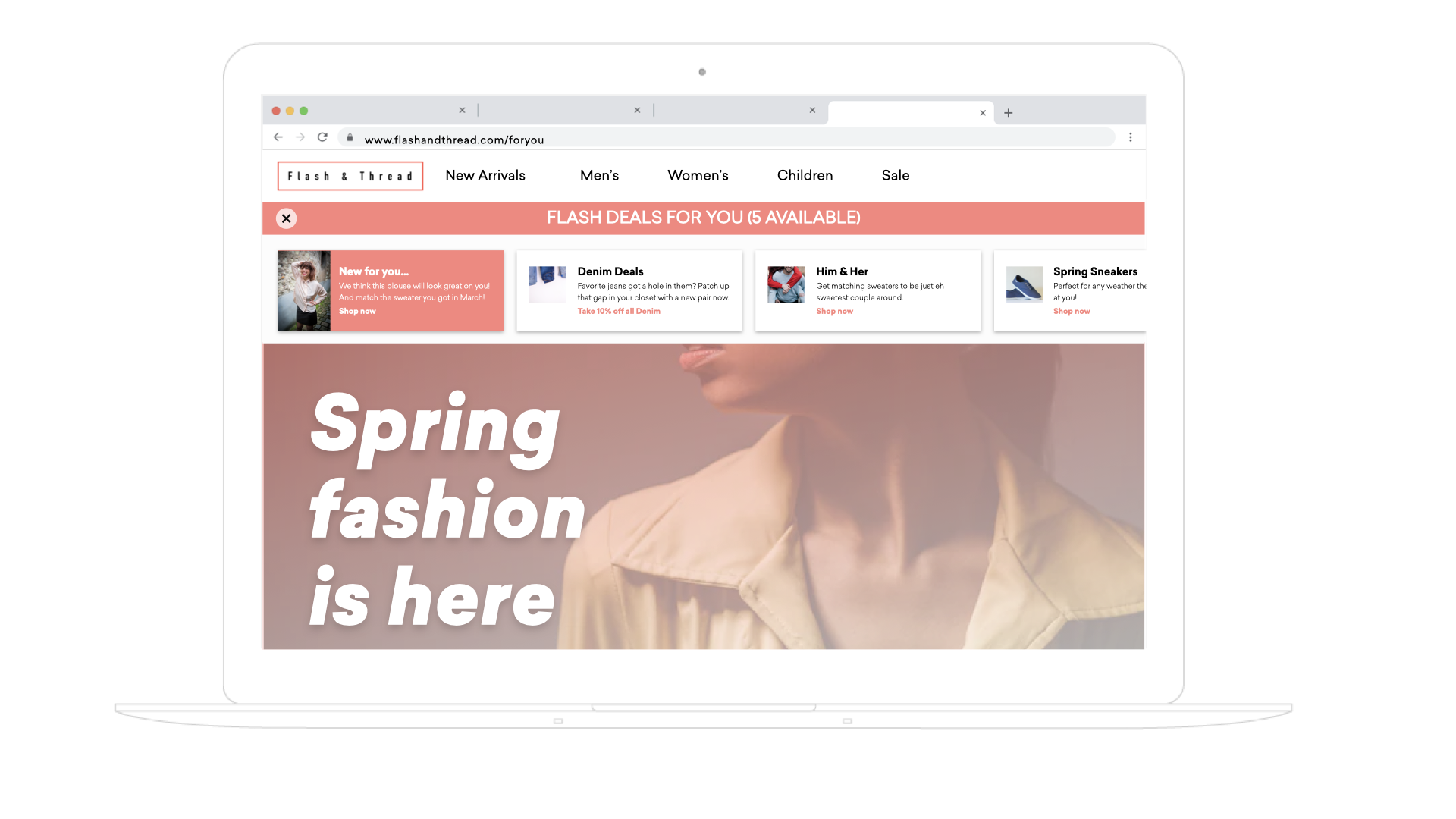
These fictional retail examples showed how the same channel could support a general promotion or a recommendation shaped around previous behavior.
A seasonal promotion “Warm up as the world cools down with a sweater for you, and one for bae, too.”A behavior-based recommendation “This chic blouse will look just great on you. And match super well with that cardigan you bought in January!”
Original artwork from the use-case presentation. The brand and scenarios are illustrative product examples.
I created a pitch presentation explaining how Braze could support engagement across a brand’s web experience.
The approach
The story connected four channels: web push, in-browser messaging, Content Cards, and email. Each had a distinct role, from bringing people back to making an active visit more useful.
What it shows
The work translated channel capabilities into a coherent story about the customer experience.
Inside the presentation
Show how it fits into the experience.
The fictional Flash & Thread storefront made persistent, personalized offers visible within an ordinary shopping experience. The product story became something the audience could see.
I created materials to help account executives explain Predictive Churn, which identifies customers at risk of leaving. It was part of Predictive Suite, Braze’s first major paid AI product.
The approach
The presentation began with retention and the cost of acquisition, then connected an audience’s definition of churn with prediction and action. It gave the sales conversation a business problem to work from.
What it shows
The work connected a technical capability to a practical customer conversation.
Presentation copy
Churn. Defined by you.
Who’s at risk. Predicted by Braze.
The message separated the customer’s judgment about retention from the product’s role in identifying risk. It gave the technical explanation a simple starting point.
Enablement & alignment
Help teams make better decisions.
Build vs Buy
My contribution: Presentation creation
I created enablement material for conversations with product, engineering, and technical stakeholders considering an in-house solution.
The work combined buyer context, stakeholder priorities, and objection handling to help teams explain where Braze could add value.
Explore the objection-handling approach
The presentation addressed three recurring reasons to build in-house: speed and resources, cost, and confidence in the engineering team.
“Focus on building solutions unique to your business…”
The response brought the conversation back to where a technical team could create distinctive value, and which engagement capabilities would need ongoing investment.
Excerpted from the enablement material. The session included contributions from PMM colleagues.
Product knowledge meets audience understanding
A clearer story. A useful next step.
That combination runs through my product and lifecycle work: understand the audience, make the value clear, and help people act on it.